
Revelation 19:1–9; Revelation 21:1–4; 1 Peter 1:18–19
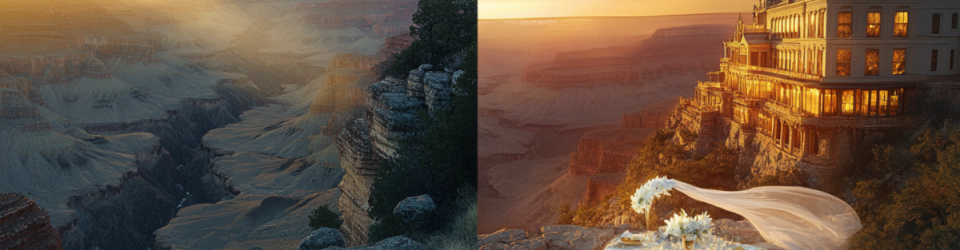
In 1901, when the first train reached the South Rim of the Grand Canyon (an enormous, 277-mile-long canyon in Arizona, USA, considered one of the world’s natural wonders, with colorful rock layers), passengers found themselves at what many considered a desolate wilderness—a massive, empty-looking chasm. Most visitors stayed only briefly, having nowhere comfortable to stay.
Railway executives hired architect Charles Whittlesey to design what seemed impossible—a luxury hotel right on the edge of this breathtaking drop. With a budget equal to about $8.4 million today, Whittlesey was asked to create beauty and comfort in a place many thought uninhabitable.
The challenges were enormous—materials had to be transported from far away, water was scarce, and the weather was harsh. Yet over the next two years, something remarkable happened. Using local limestone and pine, workers built a striking hotel that blended the charm of a Swiss mountain lodge with rugged American wilderness style. The El Tovar Hotel opened in 1905, rising magnificently from what many had considered worthless land. Where once stood only barren rock, now stood a beautiful building with electricity, heat, and running water—luxuries almost unimaginable in such a remote place.
President Theodore Roosevelt, who had initially urged people to leave the Grand Canyon untouched (“You cannot improve upon it,” he said), was himself captivated by El Tovar during his visits. World-famous figures traveled great distances to experience not just the natural wonder but the unexpected beauty created at its edge.
What had once been seen as just a vast emptiness became a place where people gathered in wonder and celebration. This hotel, built at the very edge of what seemed like desolation, transformed how visitors experienced the Grand Canyon—not just as a spectacular void, but as a place of connection and beauty.
Today, more than a century later, watching the sunlight dance across the canyon from El Tovar’s porch, visitors often feel something beyond words. In the golden light of sunset, many find themselves thinking about how this place—once dismissed as a wasteland—now draws people from every nation to witness its glory. Just as the Grand Canyon was transformed from a seemingly empty chasm into a place of wonder and welcome, God promises to transform our broken world into something breathtakingly beautiful—a wedding feast where all who accept His invitation will be welcomed as honored guests in an eternal home.
💡Did You Know? When Solomon’s Temple was destroyed by Nebuchadnezzar (Babylonian king) in 586 BC, it seemed like the end of Israel’s sacred worship. The beautiful temple that had stood for nearly 400 years lay in ruins, its treasures stolen, its walls collapsed. Yet God wasn’t finished. After 70 years of exile, a small group of Jews returned under Zerubbabel’s leadership to rebuild. The task seemed impossible—they faced fierce opposition from local residents, lack of resources, and their own discouragement. When they laid the new temple’s foundation, many who remembered Solomon’s Temple wept because this new beginning seemed so humble compared to what was lost (Ezra 3:12). The project stopped for 16 years. But through the encouragement of the prophets Haggai and Zechariah, they persevered, completing the temple in 516 BC. Though smaller and less ornate than Solomon’s Temple, this restored sanctuary became the place where Jesus himself would later teach—proving that God’s greatest works often begin with what looks like inadequate ruins.
🔥 Personal Reflection:
- What broken areas of your life—relationships, plans, or lost opportunities—might God be preparing to transform into something beautiful?
- How can you tell the difference between false “Babylonian” glitter and the genuine beauty God is creating through His judgment and restoration?
🙏 Prayer: Lord of both judgment and renewal, open our eyes to see Your purpose even in what looks like destruction. Like the builders who saw possibility in a canyon rim, or like Zerubbabel who rebuilt Your temple from ruins, help us trust Your vision when all we can see is devastation. Thank You that You never just tear down—You always rebuild something more glorious. As we see false systems crumbling in our world, keep our hearts fixed on the wedding feast where You will make all things new. Clothe us in Christ’s righteousness, making us ready for that day when beauty will fully emerge from all that has fallen. In Jesus’ name, Amen.
0 Comments