
Exodus 15:1-21; Revelation 15:2-4
“Then Moses and the children of Israel sang this song to the LORD, and spoke, saying: ‘I will sing to the LORD, for He has triumphed gloriously! The horse and its rider He has thrown into the sea!'”
The silence was deafening. Where moments before the thunderous hoofbeats of 600 Egyptian chariots had shaken the earth, now only gentle waves lapped against the shore. The most powerful army in the world lay buried beneath the Red Sea—every horse, every rider, every soldier gone.
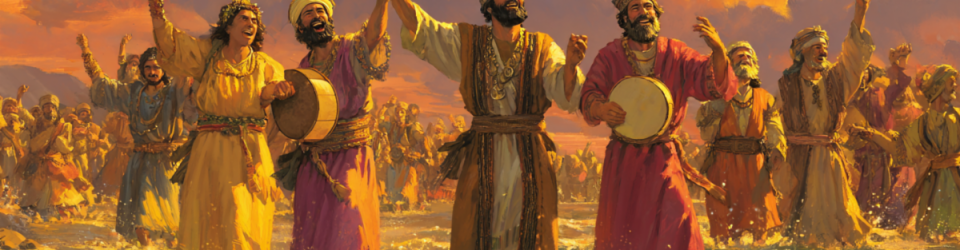
The Israelites stood on the far shore, hardly believing they were alive. Behind them, walls of water had crashed together, swallowing their enemies forever. Ahead lay freedom they had dreamed about for 400 years but never truly believed they would see. Then something beautiful happened. Moses began to sing.
Not before the battle when they were scared. Not during the battle when they were walking through the sea. But after—when they could finally see what God had done for them. “I will sing to the LORD, for He has triumphed gloriously!” Moses sang, and the people joined their voices with his. “The horse and its rider He has thrown into the sea!”
This wasn’t just any song. This was what the Bible calls a “song of experience”—music that could only be learned by going through something impossible and watching God work. You can’t sing about victory until you’ve seen victory. You can’t praise God for miracles you’ve never experienced. Moses and Miriam led the celebration, but every voice joined in. Children who had walked through walls of water. Mothers who had seen their families saved from slavery. Fathers who had watched God fight their battles. Each person had their own verse to add to the song.
Their song was full of amazement at who God is: “Who is like You, O Lord, among the gods? Who is like You, majestic in holiness, awesome in glory, working wonders?” They had seen other nations’ gods—statues of gold and stone that couldn’t move, speak, or save. But their God was alive, powerful, and personal. The song also looked forward. Moses sang about God leading them to the Promised Land and establishing His sanctuary on the holy mountain. The Red Sea victory was just the beginning of God’s plan for His people.
But here’s something amazing: this ancient song isn’t finished yet. The book of Revelation tells us that at the end of time, God’s people will stand on a “sea of glass mingled with fire” and sing “the song of Moses and the song of the Lamb.” The same victory song that began at the Red Sea will be completed when Jesus returns. Why will we sing this song in heaven? Because we’ll have our own impossible victories to celebrate. Just like the Israelites faced slavery and certain death, we face sin and eternal separation from God. Just like they couldn’t save themselves, we can’t save ourselves. And just like God opened a way through the sea, Jesus opened a way through death itself.
The redeemed in Revelation will sing from experience too. They’ll have stories of how God delivered them from addictions, healed broken relationships, provided hope in depression, or carried them through loss. Each person will have their own verse of victory to add to the eternal song. Today, you might be walking through your own Red Sea—that scary place between slavery and freedom where you can’t go back but don’t know how to move forward. The song reminds us that God specializes in impossible deliverances. Your victory song is being written right now, even if you can’t hear the music yet.
When you finally reach the other shore of your crisis, you’ll have something to sing about that you could never learn from books or hear from others. You’ll have your own song of experience to add to the great chorus of the redeemed.
Did You Know? Archaeological evidence shows that ancient victory songs were common throughout the Middle East, but the Song of Moses is unique because it focuses entirely on God’s character and power rather than human military skill. Unlike other ancient war songs that praised kings or armies, this song gives all credit to God. The song’s themes of God’s holiness, power, and future reign became the foundation for much of Israel’s worship music throughout their history.
🔥 Personal Reflection:
- What “impossible” victory in your life has given you something to sing about?
- How has going through difficult experiences changed the way you worship and praise?
- What song of experience might you be learning right now, even in the middle of a hard situation?
🙏 Prayer: Dear God, thank You for victories I can see and victories I’m still waiting for. Help me trust that You’re writing my song of deliverance even when I’m still walking through impossible places. Give me a song of experience that only comes from watching You work miracles in my life. In Jesus’ name, Amen.
0 Comments